
Moissanite Jewelry Guide: A Clear Explainer for Men
John Mike ·

Learn everything you need to know about moissanite jewelry, including how it compares to diamonds, the different jewelry types, and practical tips for choosing quality pieces with confidence.
Moissanite outshines most diamonds in raw brilliance, yet costs a fraction of the price. Few shoppers know why.
This moissanite jewelry guide fills that gap. You'll learn what moissanite actually is, how it stacks up against diamonds, and how to choose the right piece. No hype, just the facts you need before spending money.
By the end, you'll understand the science, the main jewelry types, and the checks that separate a smart buy from a regret.
Here's the roadmap:
- What moissanite is and why it matters
- How it compares to diamonds
- The main jewelry types and how to buy well
What Is Moissanite?
Moissanite is a lab-created gemstone made from silicon carbide. It was first discovered in a meteorite crater, then recreated in labs.
Today's moissanite is grown under controlled conditions. That process produces a durable, brilliant stone at a predictable price.
You might be wondering why it sparkles so hard. The answer is optics, not marketing.
Why Moissanite Shines So Brightly
Moissanite has a higher refractive index than diamond. In plain terms, it bends light more, which creates extra fire and flash.
That's why moissanite reads as intensely bright under lights. It's a favorite for stage-ready and camera-heavy looks.
Quick summary: moissanite is a real gemstone, not glass or cubic zirconia. It earns its shine through genuine optical properties.
Moissanite vs Diamond: The Honest Comparison
The moissanite vs diamond question comes down to priorities. Both look stunning, but they differ in key ways.
Here's a clear breakdown.
- Price: Moissanite costs far less, often a fraction of a diamond.
- Brilliance: Moissanite reflects more light, so it sparkles harder.
- Hardness: Diamond scores 10 on the Mohs scale; moissanite scores about 9.25. Both
handle daily wear well. - Origin: Moissanite is lab-created, avoiding mining concerns.
- Appearance: To most eyes, the two look nearly identical.
So which wins? Neither, universally. Diamonds carry traditional prestige, while moissanite offers value and bold shine.
For everyday luxury without the premium, moissanite is hard to beat. That's why it powers so much affordable luxury jewelry today.
The Main Types of Moissanite Jewelry
Moissanite fits nearly every category. Knowing your options makes the choice simpler.
Moissanite Chains
Moissanite chains bring maximum sparkle to your neckline. Tennis chains, iced-out Cuban links, and pendant chains all shine.
They're built for presence, especially under light. If you want a statement piece, this is the loudest one.
Moissanite Pendants
Moissanite pendants let you personalize your look. Crosses, Jesus pieces, initials, and religious designs are common.
They pair well with a simple chain, letting the stone lead. It's an easy entry point for first-time buyers.
Moissanite Earrings
Moissanite studs are the most versatile piece you can own. They suit daily wear, work, and formal settings alike.
Solitaire studs and iced-out clusters both hold up under close inspection. Many men start their collection here.
Moissanite Rings
Moissanite rings cover engagement rings, wedding bands, and iced-out styles. The value here is striking.
You get diamond-like brilliance at a fraction of the cost. That leaves budget for a better setting or metal.
Moissanite Bracelets
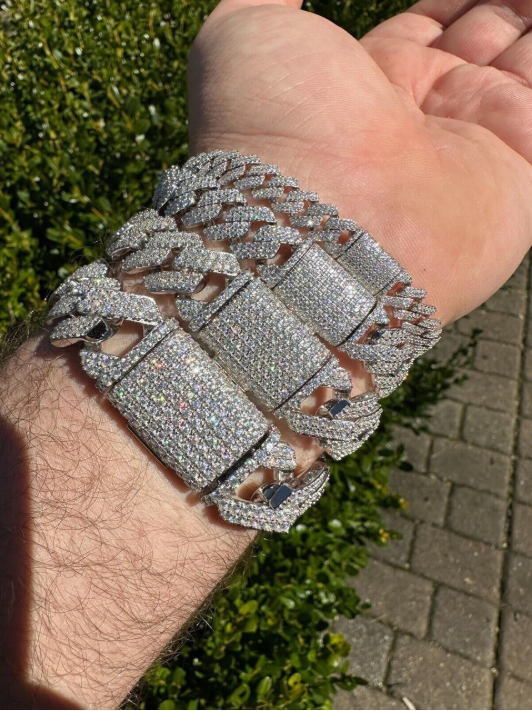
Moissanite bracelets round out a matched look. Tennis and Cuban styles mirror the chains for easy pairing.
Want to see how these categories look in practice?
Explore the moissanite jewelry collection
How to Buy Moissanite Jewelry Well
A few practical checks separate a great buy from a letdown. Run through each before you commit.
1. Confirm the Base Metal
The stone matters, but so does its setting. Look for real 925 sterling silver, 10K/14K gold, or gold vermeil.
Genuine metals hold the stones securely and last longer. Cheap bases often tarnish or bend.
2. Check the Stone Quality
Good moissanite is colorless and clean. Look for high-clarity, near-colorless stones described as VVS or D color.
Quality moissanite should pass a diamond tester. That's a useful sign of genuine silicon carbide.
3. Match Size to the Piece
Bigger isn't always better. A stud that fits your ear or a chain that suits your frame always looks more intentional.
Read the size ranges carefully before ordering. Proportion drives how premium a piece looks.
4. Buy From a Specialist
Experience shows in the finish. A maker focused on moissanite tends to set stones better.
Harlembling has specialized in moissanite since 2014, handcrafting pieces in Arezzo, Italy. Buying from a specialist lowers your risk.
5. Weigh Source and Shipping
Where a piece is made and shipped affects both quality and wait time. Direct-from-maker pricing avoids reseller markups.
Harlembling ships daily from NYC and has served over 100,000 customers. That combination adds real reassurance.
Pros and Cons of Moissanite Jewelry
A balanced view helps you decide with clear eyes.
Pros
- Exceptional brilliance, often brighter than diamond
- A fraction of diamond pricing for a similar look
- Durable enough for daily wear at 9.25 Mohs
- Lab-created, avoiding mining concerns
- Available across chains, studs, pendants, and rings
Cons
- Extra fire can look "too bright" to purist eyes
- Resale value is lower than mined diamonds
- Quality varies between sellers, so vetting matters
- Silver settings need occasional polishing
Caring for Moissanite Jewelry
Moissanite is easy to maintain. A little care keeps it brilliant for years.
Clean it gently with warm water, mild soap, and a soft cloth. Avoid harsh chemicals that can dull the setting.
Store pieces separately to prevent scratches on the metal. The stone itself resists scratching well.
Frequently Asked Questions
What is moissanite jewelry?
Moissanite jewelry uses a lab-created gemstone made from silicon carbide. It offers diamond-like brilliance at a much lower price. You'll find it in chains, studs, pendants, and rings, often set in 925 sterling silver or gold.
Is moissanite better than a diamond?
Neither is universally better. Moissanite sparkles harder and costs far less, while diamonds carry traditional prestige and higher resale value. For everyday shine and value, many shoppers prefer moissanite.
Does moissanite pass a diamond tester?
Yes, quality moissanite typically passes a standard diamond tester. Because it conducts heat similarly, testers often read it as a diamond. It's a helpful way to confirm you're getting genuine moissanite.
Is moissanite good for everyday wear?
Yes. Moissanite scores about 9.25 on the Mohs hardness scale, just below diamond. That makes it durable enough for daily wear, including studs, rings, and chains.
What metal is best for moissanite jewelry?
Real 925 sterling silver, 10K or 14K gold, and gold vermeil all work well. Genuine metals hold stones securely and last longer. Avoid cheap bases that tarnish or bend over time.
Where can I buy quality moissanite jewelry?
Buy from a specialist that makes its own pieces. Harlembling has focused on moissanite since 2014, handcrafts in Italy, and ships from NYC. Specialists tend to set stones better and price more fairly.
Conclusion
Moissanite makes premium shine accessible without the diamond price tag. Once you understand the science, the comparison, and the buying checks, the choice gets simple.
Remember the core lesson: quality lives in the stone, the metal, and the maker. Confirm all three, match the size to the piece, and buy from a specialist.
Use this guide as your checklist, then shortlist a few pieces that fit your goals. When you're ready to compare real options,